

Canada’s responsible online casino framework operates through a dual-layer system: provincial regulatory bodies enforce mandatory player protections, while licensed operators implement both required and voluntary safeguards ranging from deposit limits to AI-powered behavioral monitoring. If you’re exploring regulated platforms, check out moonbet app as an example of how modern operators integrate these features. For business leaders, understanding this landscape is essential, as compliance requirements directly impact platform design, operational costs, and competitive positioning in the Canadian market.
The regulatory environment has evolved significantly. Each province maintains its own oversight approach, with Ontario’s iGaming Ontario leading the charge on standardized player protection protocols since its 2022 launch. Quebec, British Columbia, and other jurisdictions follow distinct but overlapping frameworks, creating a complex compliance matrix for operators serving multiple regions. The result is a patchwork that demands sophisticated technical infrastructure and localized approaches to risk management.
What sets Canada apart is the integration of technology into responsible gambling measures. Self-exclusion databases now share information across provincial borders in real time. Machine learning algorithms flag concerning play patterns before traditional metrics would trigger intervention. Time and spending notifications interrupt sessions automatically, not as suggestions but as hard stops when preset thresholds are reached.
For corporate strategists and technology executives entering this space, the stakes extend beyond regulatory compliance. Player protection features influence user experience, retention rates, and brand reputation. Companies that treat responsible gambling as a core product feature, rather than a checkbox exercise, gain competitive advantage in an increasingly scrutinized market.
Canada’s Provincial Framework for Online Casino Regulation
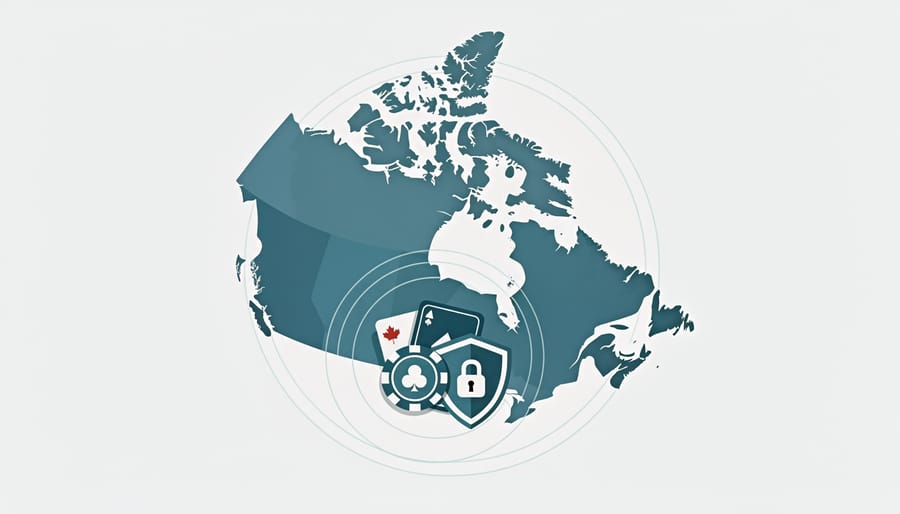
Canada’s approach to online casino regulation stands in sharp contrast to jurisdictions with centralized federal oversight. Under the Canadian Constitution, provinces and territories hold exclusive authority over gambling within their borders, resulting in a fragmented landscape where each province has its own rules regulatory bodies, and enforcement priorities. This decentralized structure creates significant operational complexity for operators seeking national reach while simultaneously allowing provinces to tailor their approaches to local values and revenue needs.
Ontario’s 2022 launch of iGaming Ontario represents the most commercially open provincial model. Rather than maintaining a government monopoly, iGaming Ontario operates as an arm’s-length regulator licensing private operators who pay 20% of gaming revenue to the province. This structure emphasizes consumer choice and competitive innovation while mandating strict responsible gambling standards including deposit limits, self-exclusion tools, and regular player communication about safer play resources. The model attracts international operators and generates substantial tax revenue, positioning Ontario as Canada’s largest regulated online gambling market.
British Columbia takes a different path through the British Columbia Lottery Corporation, which operates a crown corporation monopoly via the PlayNow platform. This closed model gives BCLC direct control over responsible gambling implementation, including integrated self-exclusion across all gambling channels (online, retail, casinos) and enhanced player monitoring capabilities. The trade-off: less operator competition and product variety, though proponents argue the monopoly structure allows more consistent harm prevention and keeps revenue within the province.
Quebec’s Espacejeux platform operated by Loto-Québec mirrors British Columbia’s monopoly approach but with stronger emphasis on cultural specificity, offering French-language interfaces and locally tailored games. The crown corporation model enables direct integration of responsible gambling measures into platform design rather than regulatory requirements imposed on third parties, though critics note the inherent conflict between a government entity simultaneously promoting gambling and protecting players from its harms.
| Province | Regulatory Body / Model | Key Responsible Gambling Requirements | Enforcement Approach |
|---|---|---|---|
| Ontario | iGaming Ontario (multi-operator licensing) | Mandatory deposit limits, self-exclusion, reality checks, problem gambling messaging | License suspension, financial penalties, compliance audits |
| British Columbia | BCLC (crown corporation monopoly) | Integrated self-exclusion across channels, behavioral monitoring, mandatory breaks | Direct platform controls, cross-channel enforcement |
| Quebec | Loto-Québec / Espacejeux (crown monopoly) | Session limits, self-assessment tools, French-language support resources | Platform-level restrictions, provincial enforcement authority |
This provincial patchwork creates both opportunities and challenges. Operators face differing compliance costs, technical requirements, and market access conditions depending on jurisdiction. For business leaders evaluating the Canadian market, understanding these provincial distinctions isn’t merely regulatory housekeeping, it fundamentally shapes market entry strategy, product development priorities, and competitive positioning. The absence of interprovincial coordination also complicates efforts to create unified self-exclusion systems or consistent player protection standards across the country.
Mandatory Responsible Gambling Features Required by Canadian Regulators

Self-Exclusion Programs and Cross-Operator Integration
Self-exclusion programs allow individuals to voluntarily ban themselves from gambling activities for a specified period, typically ranging from six months to permanent exclusion. In Canada, these systems operate primarily at the provincial level, reflecting the country’s decentralized regulatory structure. A player who self-excludes in Ontario through iGaming Ontario’s centralized system is automatically blocked from all provincially licensed online casino sites operating in that jurisdiction. Similarly, British Columbia’s GameSense voluntary self-exclusion program covers both BCLC’s digital platforms and land-based facilities.
The fragmented nature of provincial systems creates significant gaps in protection. A player excluded in one province can still access operators licensed in another jurisdiction, and offshore unregulated sites remain completely outside any self-exclusion framework. This limitation becomes particularly problematic for individuals with severe gambling disorders who need comprehensive barriers across all potential access points.
Quebec has taken steps toward addressing these gaps through partnerships with payment processors, enabling blocks at the financial transaction level rather than relying solely on operator-side controls. When a player self-excludes through Espacejeux, participating banks and payment providers can flag and decline gambling-related transactions, adding a secondary layer of protection beyond the honor system of players avoiding restricted sites.
Cross-operator integration remains technically challenging due to privacy regulations, differing data standards across provinces, and competitive sensitivities among operators who may view shared customer data as commercially sensitive. Several technology vendors are now developing identity verification solutions that use encrypted tokens to flag self-excluded individuals across multiple platforms without sharing personally identifiable information. These systems allow a player to register once for exclusion and have that status recognized by all participating operators, regardless of provincial boundaries. Early pilot programs in Ontario show promising results, though nationwide adoption faces both technical hurdles and the need for interprovincial regulatory coordination.
Age Verification and Identity Authentication Standards
Canadian online casino operators face rigorous age verification and identity authentication requirements designed to prevent underage gambling and meet anti-money laundering obligations. Every provincial regulator mandates multi-stage verification before players can deposit real money or withdraw winnings, though the specific technical standards vary by jurisdiction.
Ontario’s iGaming Ontario requires operators to verify that players are at least 19 years old and physically located within provincial boundaries before allowing real-money play. Initial checks typically involve matching name, date of birth, and address against government databases or credit bureau records. When automated verification fails or flags inconsistencies, operators must request additional documentation, typically a government-issued photo ID such as a driver’s license or passport, and sometimes a recent utility bill or bank statement to confirm residence.
Third-party verification services like Jumio, Onfido, and GBG dominate this space, offering document scanning, facial recognition, and liveness detection to prevent fraudsters from using stolen or forged credentials. These systems analyze security features on ID documents, compare uploaded photos against the document image, and may require real-time selfie videos to confirm the person creating the account matches the ID holder.
The friction this creates presents a business challenge. Lengthy or intrusive verification processes drive abandonment rates higher, particularly among mobile users. Operators must balance regulatory compliance with conversion optimization, typically by allowing limited free-play access during verification processing, streamlining document upload interfaces, and providing clear communication about why verification matters and how long approval will take.
Industry Best Practices Beyond Regulatory Minimums
Several Canadian-licensed operators have adopted responsible gambling frameworks that go well beyond what provincial regulators demand, treating player protection as a strategic priority rather than a compliance checklist. These voluntary measures serve multiple business purposes: they reduce regulatory risk, appeal to players who value corporate responsibility, and signal to institutional investors that the operator takes long-term sustainability seriously, a positioning that protects your reputation in an industry still grappling with public perception challenges.
Leading operators have implemented proactive intervention systems that contact players before harmful patterns escalate. When analytics flag unusual activity, a sharp increase in session length, consecutive losses, or late-night play spikes, trained staff reach out via email or secure message offering voluntary breaks or limit adjustments. This preemptive approach, borrowed from UK operators regulated by the Gambling Commission, contrasts with purely reactive systems that wait for players to self-report problems.
Some platforms allow players to set “cool-off” periods distinct from formal self-exclusion. A player can lock their account for 24 hours, a week, or a month without triggering the multi-year exclusions provincial programs require. This flexibility acknowledges that problem gambling exists on a spectrum and that temporary pauses can prevent escalation.
Swedish-inspired transparency measures are gaining traction. Several operators now provide monthly statements showing total deposits, withdrawals, and net position across all games, making losses visible in a way that real-time balances often obscure. Others display session clocks and loss counters persistently during play, not just as pop-ups easily dismissed.
Partnership models extend beyond regulatory mandates. Operators fund independent research into gambling harm, sponsor community treatment programs, and train customer service teams to recognize distress signals in chat interactions. These investments reflect a recognition that sustainable market growth depends on maintaining public trust and demonstrating that profit motives align with player welfare.
Technology and AI in Detecting Problem Gambling Behavior
Canadian operators are deploying behavioral analytics platforms that track hundreds of data points per player session, stake sizes, betting velocity, time of day, loss-chasing patterns after a losing streak, and deviations from established play habits. These systems feed into machine learning models trained on historical data from known problem gamblers, creating risk scores that trigger automated interventions when a player’s behavior matches concerning patterns. Ontario’s iGaming Ontario framework now requires licensees to implement such monitoring, though the specific algorithms and thresholds remain proprietary to each operator.
The technology mirrors broader trends in AI in Canada where predictive models are reshaping risk assessment across financial services. Leading platforms can identify early-stage problem gambling with roughly 70-80% accuracy, flagging players who might benefit from a reality check notification, a temporary cooling-off period, or direct outreach from a customer care team trained in harm minimization. Some operators test real-time deposit limit suggestions based on play patterns, gently nudging players toward safer boundaries without imposing hard restrictions.
Privacy remains a significant concern. Operators must balance intensive behavioral surveillance with compliance under provincial privacy laws and federal PIPEDA requirements, ensuring that player data collected for responsible gambling purposes is not repurposed for marketing or shared beyond regulated boundaries. Players rarely understand the extent of monitoring in place, creating an asymmetry that advocacy groups argue requires more transparent disclosure about what data is collected and how algorithmic decisions are made.
Accuracy challenges persist. Machine learning models can generate false positives that interrupt recreational players enjoying a winning streak, or miss problem gamblers whose patterns do not fit the training data. Cultural and demographic biases in datasets can skew predictions, particularly for Indigenous players or recent immigrants whose gambling behaviors may differ from the baseline used to train the model. The tension between proactive intervention and player autonomy divides stakeholders: regulators and health advocates favor aggressive early detection, while some players and civil liberties groups view constant algorithmic oversight as paternalistic overreach that undermines personal freedom in a legal, regulated activity.
Business Implications for Operators and Platform Providers
Responsible gambling requirements reshape the economics of Canadian online casino operations in ways that extend far beyond simple compliance checklists. Operators face substantial upfront investment in verification infrastructure, behavioral monitoring systems, and integration with provincial self-exclusion databases. These costs hit smaller entrants harder, creating barriers that favor established platforms with deeper pockets and existing technology stacks. For companies tracking business technology innovation in the gambling sector, the challenge lies in building scalable solutions that work across multiple provincial frameworks without duplicating infrastructure.
Customer acquisition costs rise when mandatory reality checks and deposit limits interrupt the onboarding flow. Operators lose high-value players who might otherwise wager aggressively, forcing a shift toward longer-term relationship building with moderate spenders. This fundamentally changes retention strategies. Companies that previously optimized for immediate revenue extraction now invest in loyalty programs, personalized communications, and customer support that reinforces sustainable play patterns. The business case resembles the shift from growth-at-all-costs to sustainable unit economics that characterizes maturing technology ventures to enterprise operations.
Yet compliance creates competitive advantages for operators willing to exceed minimum standards. Institutional investors increasingly screen gambling companies on ESG metrics, with robust responsible gambling programs directly affecting valuations and access to capital. Ontario-licensed platforms that demonstrate effective harm prevention can command premium multiples compared to offshore competitors operating in regulatory gray zones. Companies following Toronto market news see this pattern in recent acquisitions, where acquirers pay significant premiums for clean regulatory records and sophisticated player protection systems.
The tension between short-term revenue pressure and long-term sustainability defines strategic planning across the sector. Operators that position responsible gambling as core infrastructure rather than regulatory overhead build defensible market positions, while those treating it as a checkbox exercise face reputational risk and potential license revocation.
Support Resources and Intervention Pathways

Canada’s support infrastructure for problem gambling operates through a layered network of provincial, national, and operator-led services. Most provinces fund dedicated helplines that offer confidential counseling, referrals, and crisis intervention; for example, Ontario’s ConnexOntario provides 24/7 access to trained counselors who can arrange in-person treatment or connect callers with peer support groups. British Columbia’s Problem Gambling Support Service runs a similar toll-free line backed by walk-in clinics throughout the province. Quebec integrates gambling support into its broader addiction services network, reflecting a public-health approach that treats problem gambling alongside substance use disorders.
Key support resources across Canada include:
- Provincial helplines offering free, confidential counseling and referrals to specialized treatment programs
- The Canadian Centre on Substance Use and Addiction, which develops evidence-based prevention resources and training for healthcare professionals
- Online self-help tools and screening questionnaires provided through provincial gambling authorities
- In-person counseling services ranging from outpatient therapy to residential treatment for severe cases
- Peer support groups modeled on Gamblers Anonymous principles, often funded through gambling revenue allocations
Funding typically flows from a percentage of gambling revenue, Ontario, for instance, directs a portion of iGaming license fees toward treatment and prevention initiatives, creating a direct financial link between industry growth and harm-reduction capacity. Some operators supplement this public funding through voluntary partnerships with organizations like the Responsible Gambling Council, contributing to research, training programs, and awareness campaigns. This dual-funding model attempts to scale support infrastructure in proportion to market expansion, though critics argue that relying on gambling profits to address gambling harm creates inherent conflicts. Intervention pathways increasingly incorporate family support services, recognizing that problem gambling affects household finances, relationships, and mental health beyond the individual player.
Common Questions About Responsible Online Casino Play in Canada
How does self-exclusion work if I play on sites licensed in different provinces?
Self-exclusion agreements are currently province-specific, meaning you need to enroll separately with each provincial regulator’s program. Ontario’s self-exclusion system covers all iGaming Ontario licensed operators, but won’t automatically exclude you from BC’s BCLC sites or Quebec’s Espacejeux platform. Some operators voluntarily share exclusion lists, but there’s no mandatory national database yet.
Can a casino override the deposit limits I’ve set on my account?
No. Provincially-licensed operators in Canada cannot remove or increase player-initiated deposit limits without a mandatory cooling-off period, typically 24-72 hours depending on the jurisdiction. Any request to raise limits must be processed through the account settings and cannot be expedited by customer service, even if you contact them directly.
How can I verify whether an online casino is actually licensed in Canada?
Check the operator’s website footer for their regulatory license number, then verify it directly on the provincial regulator’s website (iGaming Ontario, BCLC, or Loto-Québec depending on your province). Licensed operators are legally required to display their registration details prominently, and the regulator’s site maintains a public list of all approved operators.
Where does the funding for problem gambling support services come from?
Provincial regulators typically allocate a percentage of licensing fees and operator revenue toward treatment and prevention programs. In Ontario, for example, iGaming Ontario directs funds to the Responsible Gambling Council and other accredited organizations. The exact percentage varies by province but generally ranges from 0.1% to 2% of gross gaming revenue.
Player rights under provincial regulation extend beyond these common questions to include transparent terms and conditions, fair game outcomes verified by third-party testing labs, and secure handling of personal data under Canadian privacy legislation. If you experience issues with a licensed operator, provincial regulators maintain complaint resolution processes that investigate disputes and can impose penalties on non-compliant operators.
The distinction between regulated Canadian sites and offshore operators matters significantly for player protection. While offshore sites may accept Canadian players, they operate outside provincial oversight and don’t answer to Canadian regulators if problems arise. Regulated operators must maintain segregated player funds, undergo regular compliance audits, and participate in provincial self-exclusion programs. They’re also required to process withdrawals within specified timeframes and provide clear dispute resolution pathways. Offshore sites offer none of these guarantees, and players who encounter issues have limited recourse beyond the operator’s own customer service.
Business stakeholders evaluating the Canadian market should recognize that compliance costs, including responsible gambling technology, regulatory reporting, and player support infrastructure, create barriers to entry that favor established operators with existing compliance frameworks. These requirements also position the Canadian market as more predictable and stable compared to jurisdictions with minimal oversight, potentially attracting institutional capital that values regulatory clarity over short-term revenue maximization.
Canada’s approach to responsible online casino play reflects a regulatory landscape still finding its equilibrium. Provincial jurisdictions continue to experiment with frameworks that protect players while enabling a competitive licensed market. What we see in 2026 is not a finished system but an evolving one, where technology, policy, and industry standards push each other forward.
The fragmentation across provinces creates both challenges and opportunities. While harmonization would simplify compliance and strengthen cross-border protections, the current diversity allows different regulatory philosophies to compete and learn from each other. Ontario’s commercial licensing model, BC’s crown corporation approach, and Quebec’s provincial monopoly each offer distinct lessons about balancing revenue, innovation, and harm prevention.
Technology will play an increasingly central role. AI-driven behavioral monitoring, integrated self-exclusion databases, and frictionless identity verification are moving from experimental to standard. These tools promise earlier intervention and more personalized protection, though they require careful deployment to avoid privacy intrusions or creating false security.
For operators, compliance is no longer just a regulatory checkbox. Sophisticated responsible gambling programs are becoming table stakes for attracting conscientious players, institutional investors focused on ESG metrics, and partnerships with payment providers and platforms. Companies that view player protection as core to their value proposition, rather than a cost center, will likely lead the next phase of market development.
The balance Canada strikes between commercial opportunity and social accountability will define whether the regulated market achieves its dual mandate: displacing illegal operators while genuinely protecting vulnerable players.