

When a business outgrows, downsizes, or relocates away from commercial premises it owns, six primary paths emerge: subletting to tenants, selling the property outright, converting to another use, redeveloping the site, holding as an investment, or transferring to a subsidiary entity. Each route carries distinct financial, regulatory, and operational implications that vary significantly across Canadian provinces and municipal jurisdictions.
The choice hinges on your capital position, tax strategy, and how the asset fits your long-term corporate objectives. A Calgary manufacturer moving operations overseas faces different pressures than a Toronto tech firm consolidating offices after remote work policies took hold. Market conditions in 2026 add another layer: commercial vacancy rates, interest rate environments, and buyer appetite all shift the calculus.
Canadian owner-occupiers must navigate zoning bylaws, environmental site assessments (Phase I and II), capital gains treatment, and potential First Nations consultation requirements depending on location. What worked for similar premises in 2020 may no longer apply. Business technology shifts have redrawn demand for office space, while industrial property remains tight in key logistics corridors.
The decision also carries ethical weight. Vacant buildings deteriorate, strain municipal infrastructure, and represent dormant capital. Smart operators treat surplus property as an active portfolio question, not a deferred problem. Whether you lease out floors, sell commercial property for cash or pursue adaptive reuse, the decision demands a framework that balances speed, return, and alignment with corporate values.
This guide walks through each option with Canadian regulatory context, real-world case precedents, and a decision matrix to clarify which path suits your situation.
Strategic Considerations Before Making a Decision

Before diving into specific options, you’ll need to assess several interconnected factors that will shape your decision. Market conditions sit at the top of this list. Commercial real estate values in Toronto and Vancouver have followed different trajectories than Calgary or Halifax, and timing your move poorly can cost hundreds of thousands in foregone value or carrying expenses. Check comparable sales, vacancy rates in your asset class, and whether you’re in a buyer’s or seller’s market.
Zoning restrictions determine what’s actually possible with your property. A building zoned for light industrial use can’t simply become residential lofts without municipal approval, a process that varies dramatically between jurisdictions. Montreal’s permitting requirements differ substantially from those in Edmonton, and what takes three months in one city might require eighteen in another. Review your current zoning designation and any permitted secondary uses before eliminating options.
Environmental compliance deserves careful attention, particularly if your premises housed manufacturing, chemical storage, or fuel operations. Provincial environmental regulations create different obligations depending on whether you’re in Ontario, British Columbia, or another jurisdiction. A Phase I environmental assessment becomes essential before any transaction, and discovering contamination late can derail sales or trigger remediation costs exceeding the property’s value.
Tax implications vary by option and province. Selling triggers capital gains treatment, while leasing creates ongoing income with different tax characteristics. Quebec’s tax regime treats commercial property transactions differently than Alberta’s. Consult with an accountant familiar with commercial real estate before committing to a path, because restructuring after the fact rarely works cleanly.
Finally, consider how each option serves your broader business strategy. Does holding the property provide optionality for future expansion? Would the capital from a sale fund more strategic investments? Make this decision within your company’s larger context, not in isolation.
Option 1: Selling the Property

When Selling Makes Strategic Sense
Selling becomes the clear strategic choice when a business needs to unlock equity quickly for reinvestment, debt reduction, or operational funding. If your surplus property sits in a market showing softening fundamentals, rising vacancy rates, declining rents, or oversupply in your asset class, exiting now preserves value that further delay could erode. Keep track of current conditions through resources like 2026 market watch updates to time your exit effectively.
A sale also makes sense when the property no longer aligns with your portfolio strategy. Perhaps you’re consolidating operations, shifting to fully remote work, or pivoting to a different industry sector where the asset offers no synergy. Finally, properties burdened with deferred maintenance, environmental remediation requirements, or aging building systems often cost more to hold and repair than they contribute in strategic value. In these cases, transferring those liabilities to a buyer with renovation expertise or redevelopment plans delivers better outcomes than managing ongoing deterioration.
Option 2: Leasing to Third-Party Tenants
Managing Landlord Responsibilities
Becoming a landlord transforms surplus property into an income stream, but success depends on managing a distinct set of operational responsibilities. Property maintenance sits at the core of landlord obligations: regular inspections, HVAC servicing, structural repairs, and addressing tenant maintenance requests promptly preserve asset value and tenant satisfaction. Many owner-occupiers underestimate the time commitment these tasks demand, particularly when scaling workspace needs means juggling landlord duties alongside core business operations.
Property taxes and insurance create ongoing carrying costs that must be factored into lease pricing. Commercial property insurance typically requires higher coverage limits than owner-occupied policies, and liability protection becomes critical when third parties occupy your premises. Environmental compliance adds another layer: Canadian federal and provincial regulations mandate proper waste management, energy reporting for larger buildings, and disclosure of any known environmental conditions to prospective tenants.
The self-manage versus professional management decision hinges on scale, expertise, and opportunity cost. A single tenant in a straightforward lease may not justify management fees of eight to twelve percent of gross rent. Multiple tenants, complex properties, or owners lacking real estate experience often benefit from hiring professional property management firms that handle collections, maintenance coordination, tenant disputes, and regulatory compliance. This delegation frees business leaders to focus on their primary operations rather than fielding after-hours repair calls.
Option 3: Repurposing the Space
Repurposing vacant commercial space transforms an underutilized asset into something that serves your business differently, often with lower carrying costs than selling or leasing. Instead of viewing empty premises as dead weight, progressive Canadian companies are converting former office floors into secure data storage facilities, pilot manufacturing labs, employee wellness centres, or collaborative innovation spaces that support hybrid work models.
The appeal lies in retaining ownership while extracting new value. A Toronto software firm converted its surplus third floor into a client demonstration centre and product testing lab, avoiding the expense of renting separate facilities elsewhere. A Vancouver manufacturing company transformed an idle warehouse section into an employee training academy with hands-on equipment stations, boosting retention while using space that would otherwise sit empty.
Adaptive reuse has become the pragmatic choice for Canadian businesses caught between uncertain space needs and strong real estate fundamentals, you’re not betting on market timing, you’re creating utility that didn’t exist before.
The challenge is navigating municipal requirements. Changing a property’s use often triggers zoning reviews, building code updates, and occupancy permit modifications. Converting office space to light manufacturing may require ventilation upgrades, fire suppression enhancements, or parking adjustments. Budget three to six months for permitting in major cities, longer if environmental assessments surface contamination issues requiring remediation.
Renovation economics vary wildly. Basic conversions, turning cubicle farms into open training areas, might cost $15 to $30 per square foot for cosmetic changes and minor mechanical updates. More intensive projects like adding lab-grade HVAC or reinforced flooring for heavy equipment can reach $100 per square foot or more. Compare these costs against what you’d pay annually to lease equivalent specialized space elsewhere. If repurposing costs equal two years of equivalent lease payments and you’ll use the space for five, the math works.
Option 4: Subleasing Arrangements
Subleasing offers owner-occupiers a middle ground between selling and holding, allowing them to generate income while retaining ownership and future optionality. In this arrangement, the original owner leases all or part of their premises to another business, creating a tenant relationship without divesting the asset. This flexibility makes subleasing particularly attractive in uncertain economic environments where long-term commitments feel risky.
The legal framework varies by province, but generally requires documenting the sublease agreement with proper terms covering rent, duration, permitted uses, maintenance responsibilities, and exit clauses. Ontario’s Commercial Tenancies Act and similar provincial legislation govern these relationships, establishing baseline rights and obligations for both parties. Your sublease agreement should clearly delineate which improvements the subtenant can make and what happens to those improvements when the arrangement ends.
Profit structures typically involve the subtenant paying rent at or near market rates, though some owner-occupiers negotiate revenue-sharing models where the subtenant pays base rent plus a percentage of their business revenue generated on-site. This approach works well when the subtenant operates a complementary business that benefits from the location or infrastructure you’ve built. Companies exploring AI financing options for growth often seek these flexible arrangements rather than traditional long-term leases.
The trade-off lies in maintaining control versus offering flexibility. You retain ownership and can reclaim the space when your business needs change, but you also remain responsible for major structural issues and property taxes unless explicitly transferred.
Option 5: Holding as Investment
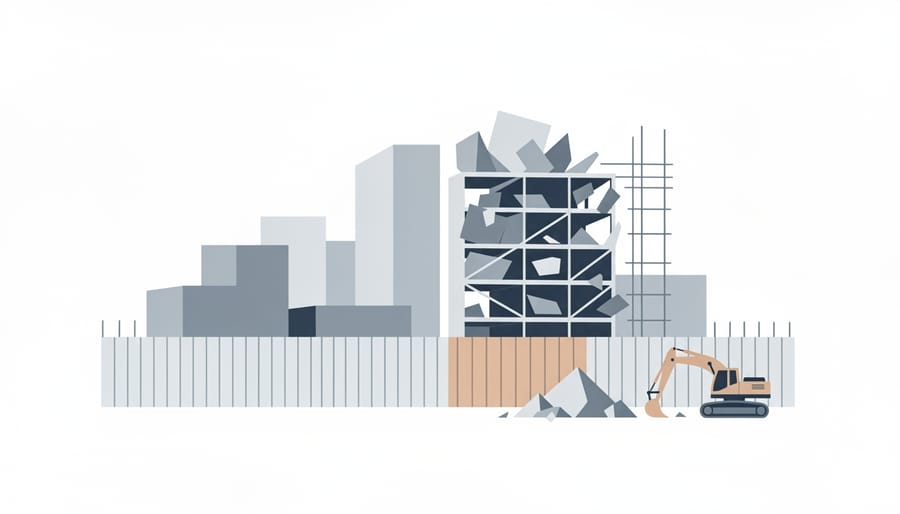
Holding surplus commercial property as a passive investment requires hard-eyed calculation of carrying costs against realistic appreciation forecasts. Property taxes, insurance, utilities for minimal climate control, security measures and routine maintenance compound quickly. A 50,000-square-foot warehouse in suburban Toronto might incur $180,000 annually in these expenses, while generating zero revenue. Many owner-occupiers underestimate how quickly holding costs erode the theoretical gains from future property appreciation.
The tax treatment adds complexity. Canada’s Income Tax Act doesn’t exempt vacant commercial property from capital gains calculations, and some municipalities levy vacancy taxes on underutilized commercial space. Vancouver’s Empty Homes Tax, while primarily residential-focused, reflects a broader regulatory trend that may expand to commercial properties in major urban centres.
Opportunity cost matters more than most financial models acknowledge. Capital tied up in idle real estate can’t fund business expansion, technology upgrades or higher-yield investments. If your business generates 18 percent returns on operational investments, a property appreciating at 4 percent annually represents a significant strategic loss, even before accounting for holding expenses.
This approach makes sense in specific scenarios: properties in transformation districts where zoning changes or infrastructure projects will materially increase values within three to five years, assets held for specific succession planning purposes, or situations where sale timing would trigger adverse tax consequences. The decision demands rigorous financial modelling that accounts for inflation-adjusted costs and realistic, market-supported appreciation projections rather than optimistic assumptions.
Option 6: Redevelopment and Intensification
Redevelopment transforms surplus property into a higher-value asset, but it’s the most capital-intensive and complex option available to owner-occupiers. This strategy involves either substantial renovation or complete demolition and reconstruction to unlock greater economic potential from the land.
Before committing resources, commission a comprehensive feasibility study that examines structural integrity, soil conditions, utility capacity, and highest-and-best-use analysis for the site. Engineering consultants will assess whether existing structures can support additional floors or require full replacement. Financial modelling should project development costs against anticipated returns, typically spanning 18 to 36 months from approvals to completion.
Municipal approval processes vary dramatically across Canadian jurisdictions. Vancouver, Toronto, and Montreal have implemented streamlined pathways for projects that increase housing or mixed-use density near transit corridors. However, approvals still require rezoning applications, development permits, and often public consultation periods that extend timelines by six to twelve months. Engage planning consultants early who understand local municipal dynamics and can navigate political considerations inherent in reputation risk management when community opposition emerges.
Environmental assessments become critical for brownfield sites or older industrial properties. Phase I and II studies identify contamination that must be remediated before construction begins, potentially adding $500,000 to $2 million in unexpected costs. Provincial programs in Ontario and British Columbia offer grants covering up to 50% of remediation expenses for qualifying projects.
Construction financing typically requires 25-35% equity with the remainder funded through development loans at prime plus 2-4%. Lenders scrutinize pre-leasing commitments or pre-sale agreements before releasing funds.
Recent examples include a former manufacturing facility in Kitchener converted to a six-storey mixed-use building, and a Calgary office park redeveloped into a transit-oriented community with ground-floor retail.
Environmental and Regulatory Compliance Across All Options
Environmental obligations don’t disappear when you decide to sell, lease, or repurpose commercial premises. Canadian environmental law operates on a strict liability basis, meaning current owners can be held responsible for contamination regardless of when it occurred or who caused it. This reality makes environmental due diligence essential before executing any of the six options outlined above.
A Phase I Environmental Site Assessment represents the baseline requirement. This desk-based review examines property history, previous uses, surrounding land activities, and regulatory records to identify potential contamination risks. If the Phase I flags concerns, common with properties that housed manufacturing, automotive services, dry cleaning, or fuel storage, a Phase II assessment follows. This involves soil and groundwater sampling to confirm whether contamination exists and at what levels.
The financial stakes are substantial. Remediation costs vary wildly depending on contaminant type and soil conditions, but petroleum hydrocarbon cleanup at a former gas station site can easily run $500,000 to $2 million. Heavy metal contamination or chlorinated solvents push costs higher.
How environmental liability transfers depends entirely on your chosen option. Selling the property typically transfers responsibility to the buyer, but only if disclosure obligations are met and the purchase agreement explicitly addresses environmental conditions. Leasing to a third party keeps liability with you as the owner. Redevelopment triggers the most stringent requirements: you’ll need Record of Site Condition filings in Ontario or similar certificates of compliance in other provinces before construction permits are issued.
Provincial regulations add another layer. British Columbia’s contaminated sites regime differs from Quebec’s approach, which differs from Alberta’s framework. All operate under the federal Canadian Environmental Protection Act umbrella, but enforcement and specific requirements vary by jurisdiction. Wastewater discharge permits, air quality standards for any ongoing operations, and energy efficiency compliance under updated building codes also factor into your decision matrix, particularly if you’re repurposing space or managing tenants whose activities generate environmental impacts.
Making the Decision: A Framework for Canadian Business Leaders
With six distinct pathways available, the decision on surplus property demands a methodical approach rather than rushed judgment. Start by assembling a core advisory team that includes a commercial real estate lawyer familiar with your province’s regulations, an accountant with expertise in corporate property taxation, an environmental consultant capable of assessing compliance risks, and a commercial broker with current market intelligence. These professionals shouldn’t work in isolation, convene them collectively to evaluate your specific situation and identify interdependencies between legal, financial, environmental and market factors.
Conduct scenario analysis by modeling the financial outcomes of each viable option over a three-to-five-year horizon. Compare net proceeds from an immediate sale against projected rental income minus landlord obligations. Factor in opportunity costs: capital tied up in vacant property could generate returns elsewhere. Weight the scenarios against your corporate strategy, a technology firm pursuing aggressive growth may prioritize liquidity over property appreciation, while an established manufacturer might value the flexibility of retained ownership.
Align property decisions with your broader business objectives. If your company is streamlining operations or raising capital for expansion, selling delivers immediate resources. If market conditions suggest prices will rise significantly within two years, holding or minimal repurposing preserves future value. If your sector faces regulatory uncertainty, a sublease arrangement maintains optionality while generating interim revenue.
How long does it typically take to sell commercial property in Canada?
Commercial sales usually take four to nine months from listing to closing, depending on property type, location, and market conditions. Complex properties or those requiring environmental assessments may extend beyond a year.
Can I lease property while exploring a sale?
Yes, short-term leases or month-to-month arrangements allow you to generate revenue while marketing the property. Ensure lease terms don’t complicate the sale or reduce buyer interest.
What are the tax implications of each option?
Sales trigger capital gains tax on appreciation, while rental income is taxed as ordinary business income. Holding vacant property may limit deductible expenses, and repurposing can affect depreciation schedules, consult your accountant for scenario-specific guidance.
Do I need environmental insurance?
Environmental insurance makes sense if assessments reveal potential contamination or if you’re leasing to industrial tenants. It protects against unforeseen remediation costs and can make the property more attractive to buyers.
Decisiveness matters more than perfection. Business leaders often default to inaction because no option appears ideal, but holding a surplus property without strategy creates ongoing costs and diverts management attention. Set a decision deadline, evaluate options against clear criteria, and commit to a path. The Canadian commercial property market rewards those who act strategically rather than reactively.
Surplus commercial property decisions in 2026 require balancing immediate financial pressures against long-term strategic value. Canadian business leaders face no universal solution, the right path depends on your specific cash flow needs, market positioning, risk tolerance, and corporate objectives. A profitable sale in Toronto’s heated market may not translate to similar returns in a secondary city. A sublease that preserves flexibility might prove ideal for one organization while another benefits from converting space into innovation hubs that attract talent.
Technology platforms have made property transactions more transparent, yet they’ve also amplified the complexity of decision-making. Remote work patterns continue shifting demand toward flexible configurations and prime urban cores simultaneously. Environmental compliance has evolved from regulatory checkbox to competitive differentiator, with investors and stakeholders scrutinizing your property portfolio’s carbon footprint and remediation commitments.
The organizations that thrive treat surplus property as strategic capital rather than stranded costs. They assemble qualified advisors early, model multiple scenarios rigorously, and act decisively rather than defaulting to inertia. They recognize that today’s vacant space might become tomorrow’s revenue stream, community asset, or environmental liability depending on the choices made now. Your premises decision reflects your broader corporate values, make it count.