
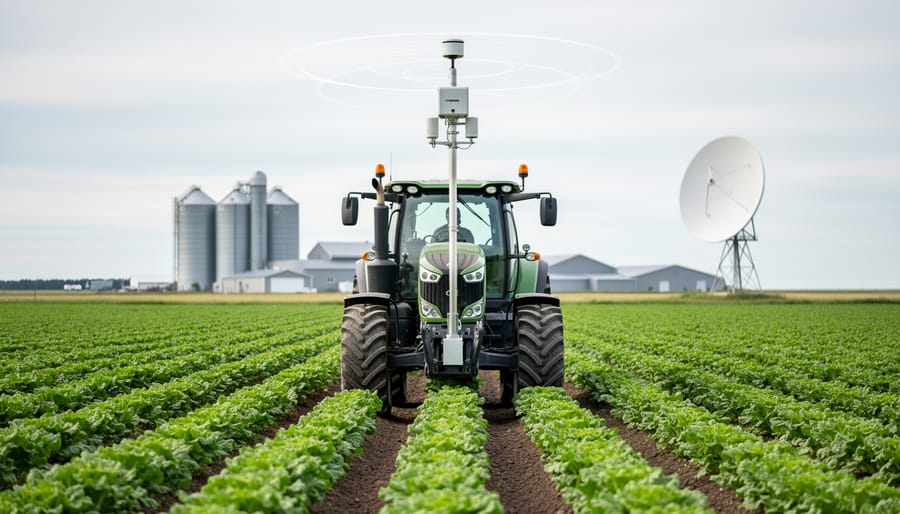
Agriculture and innovation refers to the integration of cutting-edge technologies, data-driven methodologies, and novel farming practices that fundamentally reshape how food is produced, distributed, and consumed. This transformation addresses mounting pressures: climate volatility, labour shortages, and the need to feed a growing global population while reducing environmental impact.
For Canadian business leaders evaluating investment opportunities in 2026, the agriculture sector represents a compelling convergence of necessity and technological capability. Precision farming tools now use satellite imagery and sensor networks to optimize inputs at the field level. Vertical farms operate in urban centres, producing leafy greens year-round with 95% less water than conventional methods. Gene-editing techniques accelerate crop development timelines from decades to years.
The practical implications extend beyond yield improvements. Supply chain transparency platforms track products from seed to supermarket shelf, satisfying consumer demand for traceability. Autonomous machinery addresses chronic labour gaps in rural regions. Predictive analytics help growers anticipate pest outbreaks before they devastate crops.
This article examines the operational mechanisms driving agricultural innovation, categorizes the technologies reshaping Canadian farms, and presents case studies demonstrating real-world adoption. You’ll find expert perspectives on implementation challenges, ROI considerations for technology investments, and the regulatory landscape shaping deployment strategies. Whether assessing venture opportunities or planning technology adoption within established agricultural operations, understanding these innovation dynamics is essential for competitive positioning in a sector undergoing its most significant transformation in generations.
Defining Agriculture and Innovation in the Modern Context
Agriculture and innovation represents the systematic integration of advanced technologies, scientific methodologies, and sustainable practices into food production systems to enhance productivity, environmental performance, and economic viability. This convergence fundamentally redefines how we grow, harvest, process, and distribute food, transforming traditional farming into a data-intensive, precision-driven enterprise that addresses mounting challenges around climate resilience, resource scarcity, and global food security.
The modern agricultural landscape operates at the intersection of multiple disciplines. Biotechnology enables crops engineered for drought tolerance and disease resistance. Automation replaces labour-intensive manual processes with robotic systems that operate with surgical precision. Data analytics converts millions of sensor readings into actionable insights that optimize irrigation schedules, fertilizer application, and harvest timing. Environmental stewardship practices restore soil health while reducing chemical inputs and carbon emissions.
- Precision Agriculture
- The use of GPS, sensors, and data analytics to tailor farming practices to specific field conditions, maximizing resource efficiency and crop yields while minimizing waste.
- Agtech
- Agricultural technology encompassing hardware, software, and biological innovations that modernize farming operations, from autonomous machinery to predictive analytics platforms.
- Vertical Farming
- Controlled environment agriculture using stacked growing systems, LED lighting, and hydroponics to produce crops year-round in urban settings with minimal land and water use.
- Bioengineering
- The application of genetic modification and CRISPR techniques to develop crop varieties with enhanced traits such as pest resistance, nutritional content, or climate adaptability.
- Regenerative Agriculture
- Farming practices focused on rebuilding soil organic matter, increasing biodiversity, and sequestering carbon to restore ecosystem health while maintaining productivity.
This transformation extends beyond farm gates. Supply chain optimization powered by blockchain ensures transparency from field to consumer. Machine learning algorithms predict market demand patterns, reducing food waste. Cellular agriculture produces animal proteins without livestock, fundamentally reimagining protein production.
For Canadian business leaders, agriculture and innovation represents a sector undergoing technological disruption comparable to what manufacturing experienced decades ago. The farms adopting these technologies gain competitive advantages through lower input costs, higher yields, and access to premium markets demanding sustainability credentials. Those that delay risk obsolescence as margins tighten and environmental regulations strengthen.
How Agricultural Innovation Works: The Mechanisms of Transformation
Technology Integration and Data Analytics
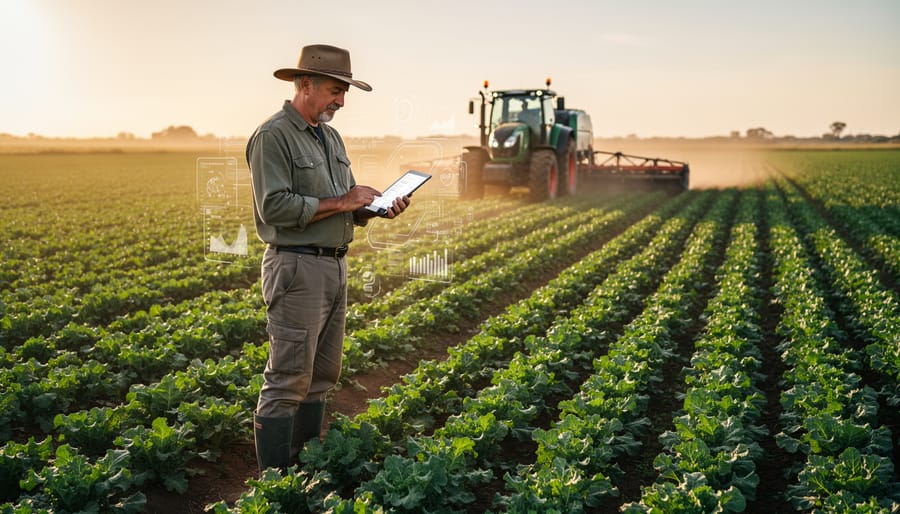
Modern farms have become sophisticated data operations. IoT sensors embedded in soil continuously measure moisture levels, nutrient content, and temperature fluctuations, transmitting readings every few minutes to cloud-based platforms. Satellite imagery overlays this ground-level data with multispectral views of entire fields, revealing variations in plant health invisible to the naked eye. These inputs feed AI algorithms that identify patterns across seasons, weather conditions, and management decisions.
The real breakthrough comes when machine learning models process years of historical data alongside real-time inputs. Systems trained on thousands of growing cycles can predict optimal irrigation schedules three days ahead, adjust fertilizer application rates down to square-meter precision, or flag disease outbreaks before visible symptoms appear. Machine learning for crop yield prediction now routinely achieves accuracy within 5-8%, letting operators hedge market positions and optimize storage logistics with greater confidence.
Canadian operations deploying these systems report water usage reductions of 20-35% and input cost savings averaging 18% annually. The shift from reactive farming to predictive management fundamentally changes resource allocation: rather than treating a field uniformly, operators direct resources precisely where data indicates they will deliver measurable returns. This granular control translates directly to margin improvement, particularly for high-value crops where small efficiency gains compound across large acreages.
From Laboratory to Field: The Innovation Pipeline
The journey from agricultural research to widespread adoption follows a deliberate pathway designed to validate effectiveness, ensure safety, and prove commercial viability. In Canada, this innovation pipeline typically begins with controlled laboratory research at institutions like Agriculture and Agri-Food Canada or university research centers, where scientists develop and test new technologies, crop varieties, or methodologies under precise conditions.
Promising innovations advance to confined field trials where researchers assess performance in real agricultural environments while monitoring for unintended effects. A drought-resistant wheat variety might undergo three to five years of field testing across different Canadian growing regions before moving forward. These trials generate the data required for regulatory review by bodies including the Canadian Food Inspection Agency and Health Canada, which evaluate everything from environmental impact to food safety.
Pilot programs represent the critical bridge between research and commercialization. Select farms test innovations at operational scale, providing feedback on practical challenges, economic viability, and integration with existing farm systems. This phase often reveals implementation hurdles invisible in controlled trials, a precision sprayer that works flawlessly in test plots might face unexpected issues with variable field conditions or equipment compatibility.
Commercial deployment occurs only after regulatory approval and demonstrated farm-level success. Even then, adoption rates vary significantly based on capital requirements, learning curves, and perceived return on investment. Canadian regulations prioritize safety and environmental protection, which can extend timelines compared to other jurisdictions, but this thoroughness builds market confidence and protects agricultural systems from premature or problematic technologies.
Collaborative Ecosystems
Agricultural innovation rarely emerges from isolated actors. Instead, Canada’s most significant advances arise from intentionally designed collaborative ecosystems where universities, private companies, government bodies, and farming cooperatives pool resources, expertise, and market access.
Universities anchor this network by conducting fundamental research and field trials. Institutions like the University of Guelph and the University of Saskatchewan maintain experimental farms where new crop varieties, soil management techniques, and precision equipment undergo rigorous testing before commercial release. These academic partnerships provide the scientific validation that both investors and farmers require.
Private sector companies translate research into scalable products and services. Agtech startups partner with established agricultural input suppliers to access distribution networks, while larger corporations fund university research in exchange for licensing agreements. This symbiosis accelerates the path from laboratory discovery to farm implementation, often reducing development timelines from decades to years.
Government agencies facilitate these connections through funding programs, regulatory guidance, and demonstration farms. Agriculture and Agri-Food Canada’s Canadian Agricultural Partnership supports collaborative pilot projects, while provincial ministries connect researchers with farming operations willing to serve as early adopters. These public investments reduce financial risk for all participants.
Farming cooperatives complete the ecosystem by providing real-world testing environments and aggregating producer feedback. Their collective purchasing power makes experimental technologies economically viable at scale, while their practical insights refine innovations before broader market launch. This multi-stakeholder approach transforms agricultural innovation from theoretical possibility into operational reality.
Types and Components of Agricultural Innovation
Precision Agriculture Technologies
Precision agriculture technologies represent targeted investments that translate directly into operational savings and yield improvements. GPS-guided tractors and planters achieve centimetre-level accuracy, eliminating overlap and input waste across large fields. A Saskatchewan grain operation reported 12% fertilizer savings in the first season after adopting variable rate application systems that adjust seeding and chemical inputs based on real-time soil data.
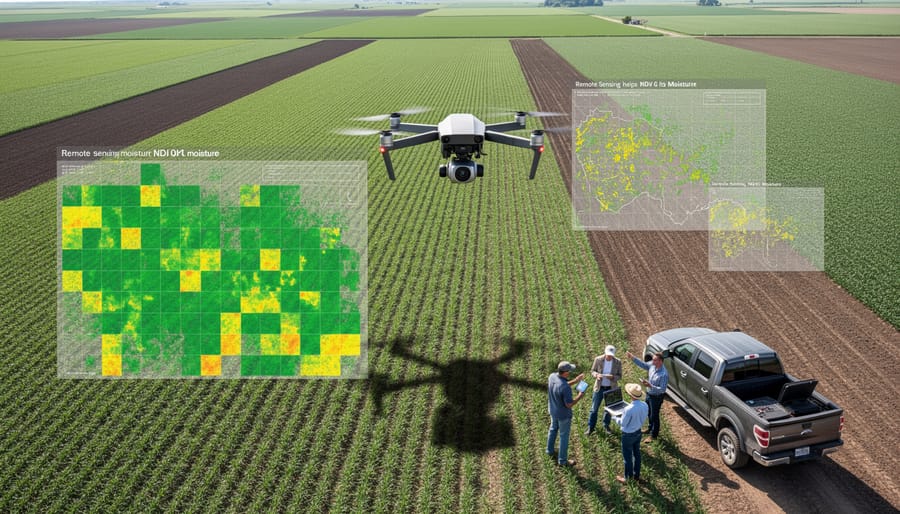
Drone surveillance provides agronomic intelligence at a fraction of traditional scouting costs. Multispectral cameras identify pest pressure, nutrient deficiencies, and irrigation stress days before symptoms become visible to the naked eye. Soil sensors embedded throughout fields transmit moisture, pH, and temperature readings to farm management platforms, enabling producers to shift from reactive to predictive decision-making.
Variable rate technology transforms uniform field treatment into precision interventions. Controllers on sprayers and spreaders adjust application rates automatically as equipment crosses zones with different soil types, drainage patterns, or historical productivity. This granular approach cuts input costs while protecting water quality and maximizing genetic potential across every acre.
Biotechnology and Genetic Innovations
Biotechnology represents one of the most transformative categories in modern agriculture. CRISPR gene editing enables scientists to make precise modifications to plant DNA, accelerating the development of crops with specific traits that would take decades through traditional breeding. Canadian researchers are using these techniques to create wheat varieties that maintain yield in drought conditions and canola strains resistant to emerging fungal diseases.
Enhanced nutritional profiles address both market demand and public health objectives. Biofortified crops deliver higher concentrations of vitamins, minerals, and beneficial compounds, soybeans engineered for omega-3 fatty acids, rice varieties with elevated vitamin A content, and potatoes with reduced acrylamide formation during cooking. These innovations create differentiation opportunities for Canadian producers in premium export markets.
Disease-resistant varieties reduce chemical input costs while improving environmental outcomes. New tomato cultivars resist late blight without fungicide applications, and barley varieties withstand net blotch infections that historically devastated crops across the Prairies. The business case centers on protecting revenue through yield stability and reducing operational expenses tied to disease management programs.
Automation and Robotics
Automation and robotics represent a fundamental shift in farm operations, replacing manual labour with intelligent machines that work around the clock. Autonomous tractors equipped with GPS and computer vision navigate fields independently, adjusting speed and path based on terrain and obstacles. These systems reduce fuel consumption by up to 20% through optimized routing while eliminating operator fatigue during extended planting or harvesting windows.
Robotic harvesters use sophisticated imaging systems to identify ripe produce, applying the precise pressure needed to pick delicate fruits without bruising. A single unit can match the output of twelve human workers, operating continuously during optimal harvest periods. Automated irrigation systems integrate weather forecasts, soil moisture sensors, and crop water requirements to deliver exactly what plants need, cutting water usage by 30-40% while improving yield quality.
AI-powered sorting technology processes harvested crops at rates exceeding 15 items per second, grading by size, colour, and defect detection with accuracy that surpasses human inspection. Canadian greenhouse operations deploying these systems report 15-25% reductions in post-harvest losses and improved consistency in product quality that commands premium pricing in export markets.
Sustainable and Regenerative Practices
Sustainable and regenerative practices represent agriculture’s response to climate imperatives while maintaining profitability. Carbon farming techniques, cover cropping, reduced tillage, and rotational grazing, sequester atmospheric carbon in soil, with Canadian producers earning offset credits that create new revenue streams. These methods rebuild soil organic matter that decades of intensive farming depleted, improving water retention and reducing input costs.
Water conservation systems combine drip irrigation, soil moisture sensors, and weather forecasting to cut water use by 30-40% compared to traditional methods. Precision application delivers water where crops need it, when they need it, eliminating waste.
Integrated pest management replaces calendar-based pesticide applications with targeted interventions triggered by actual pest populations. Biological controls, trap crops, and beneficial insects reduce chemical inputs while maintaining yields, Saskatchewan wheat producers report 25% lower pesticide costs using IPM protocols.
Circular economy approaches close nutrient loops: livestock waste becomes biogas and fertilizer, crop residues feed anaerobic digesters, and processing byproducts return to fields. Quebec dairy operations demonstrate this model, converting manure into renewable energy that powers facilities while producing pathogen-free soil amendments.
Alternative Food Production Systems
Alternative food production systems represent a fundamental shift in where and how we grow food, moving cultivation into controlled environments that dramatically reduce land, water, and transport requirements. These innovations are particularly relevant for Canadian business leaders examining supply chain resilience and sustainable food security strategies.
Vertical farms stack growing layers in warehouses or purpose-built facilities, using LED lighting calibrated to specific crop needs and hydroponic or aeroponic nutrient delivery. A single vertical farm occupying one acre of building space can yield equivalent production to 10-20 acres of conventional farmland while using 95% less water. Canadian operations in cities like Calgary and Montreal demonstrate year-round production of leafy greens and herbs with consistent quality, eliminating weather-related crop failures and reducing last-mile distribution costs.
Controlled environment agriculture extends beyond vertical farms to encompass greenhouses with sophisticated climate management, CO2 enrichment, and automated nutrient systems. These facilities combine traditional growing methods with sensor networks and AI-driven environmental optimization, achieving 30-50% higher yields than open-field equivalents while protecting crops from pests and extreme weather.
Cellular agriculture produces meat, dairy, and other animal products through cell cultivation rather than traditional livestock farming, addressing both environmental concerns and scalability challenges. Though still emerging commercially, Canadian companies are developing cultivated proteins that require 90% less land and water than conventional animal agriculture.
Aquaponics integrates fish farming with hydroponic plant cultivation, creating closed-loop systems where fish waste provides nutrients for crops while plants filter water returned to fish tanks, demonstrating circular economy principles in food production.
Real-World Uses and Applications
Case Study: Canadian Precision Agriculture Adoption
In 2024, Horizon Farms, a 2,800-acre mixed grain operation near Brandon, Manitoba, committed $340,000 to a phased precision agriculture rollout that would fundamentally change how the family business approached crop management and resource allocation.
Owner-operator Sarah Chen began with soil mapping and variable-rate fertilizer application technology, partnering with a Winnipeg-based agtech firm to analyze soil conductivity, organic matter, and nutrient profiles across 147 management zones. The initial season revealed fertilizer savings of 18% while boosting canola yields by 12% in previously underperforming zones, a combined benefit worth $87,000 against a $95,000 first-year investment.
Phase two introduced drone-mounted multispectral cameras and AI-powered analytics software. Weekly flights identified moisture stress, nutrient deficiencies, and pest pressure before visible symptoms appeared, enabling targeted interventions that reduced fungicide applications by 22% and cut water usage by 31,000 gallons per growing season.
Chen faced significant challenges beyond capital outlay. Integrating four separate software platforms required custom API development, costing an additional $18,000. Training her three full-time employees took 120 hours spread across eight months. Cellular connectivity gaps in rural Manitoba forced investment in private LTE infrastructure.
By year three, cumulative cost savings and yield improvements exceeded $310,000. Chen’s operation now provides agronomic data to university researchers studying climate adaptation strategies, creating an unexpected revenue stream worth $22,000 annually. The technology stack has become central to succession planning discussions with her two sons, both of whom see data-driven agriculture as essential to long-term viability.
Industry Leader Perspective
Industry Leader Perspective: Navigating Agriculture and Innovation in Practice
Sarah Chen, CEO of Prairie Innovations AgTech and third-generation farmer from Saskatchewan, oversees operations integrating precision agriculture across 5,000 acres while developing sensor technology for Western Canadian conditions. “The biggest mistake I see businesses make is treating agricultural innovation as a technology purchase rather than an operational transformation,” Chen explains. “We implemented soil moisture sensors and variable rate application systems gradually over three growing seasons, learning which data points actually influenced decision-making versus which created noise.”
Her implementation strategy emphasizes phased adoption with clear ROI benchmarks. “Start with one field, one technology, and measure everything. We discovered that our drone imagery investment paid for itself in reduced fertilizer costs within eighteen months, but only after we trained staff to interpret the data correctly.” Chen stresses the importance of employee buy-in: “Technology only works when your team understands the ‘why’ behind it. We run monthly sessions where field managers review results and suggest adjustments.”
Looking ahead, Chen sees convergence opportunities: “The next frontier is integrating carbon credit systems with precision ag data. Farmers who’ve already invested in monitoring can monetize their sustainability practices, turning innovation from a cost centre into a revenue stream. Canadian operations that build this infrastructure now will have significant competitive advantages by 2028.”
Frequently Asked Questions About Agriculture and Innovation
What are the initial investment costs for agricultural innovation technologies?
Investment varies significantly based on scale and technology type. Precision agriculture systems for a mid-sized operation typically range from $50,000 to $200,000, while advanced robotics and automation can exceed $500,000. Many Canadian operations adopt phased implementation strategies, starting with specific technologies that address their most pressing operational challenges before expanding to comprehensive systems.
How long does it take to realize return on investment in agriculture and innovation?
ROI timelines depend on the innovation category and implementation quality. Precision agriculture technologies often show measurable efficiency gains within the first growing season, with full ROI typically achieved in three to five years. More transformative innovations like automated systems or controlled environment facilities may require five to seven years for complete payback, though operational cost reductions begin immediately.
What skills gaps need to be addressed when implementing agricultural innovation?
The primary gap involves data literacy and technical troubleshooting capabilities. Farm operations need team members who can interpret analytics dashboards, maintain sophisticated equipment, and make decisions based on sensor data rather than solely on experience. Canadian agricultural colleges and industry associations now offer targeted training programs, and many technology providers include comprehensive operator training in their implementation packages.
How does regulatory compliance affect innovation adoption in Canadian agriculture?
Health Canada and the Canadian Food Inspection Agency regulate new crop varieties, biotechnology applications, and certain production methods. The approval process for genetically modified organisms can take several years, while mechanical innovations face fewer regulatory hurdles. Understanding the regulatory pathway is essential for business planning, as compliance timelines directly impact commercialization schedules and market entry strategies.
Beyond these operational considerations, business leaders evaluating agricultural innovation opportunities should recognize that successful implementation requires more than capital investment. The transformation demands organizational change management, ongoing technical support relationships, and willingness to adapt traditional practices. Canadian operations that treat innovation as an integrated business strategy rather than isolated technology purchases consistently achieve superior outcomes.
Environmental compliance considerations increasingly drive innovation adoption decisions. Provincial regulations around water use, nutrient management, and emissions reduction create both challenges and opportunities. Technologies that demonstrate measurable environmental benefits often qualify for government incentive programs, effectively reducing net implementation costs while positioning operations ahead of anticipated regulatory requirements.
The transformation of Canadian agriculture through innovation represents more than technological advancement, it’s a fundamental restructuring of how we produce food, manage resources, and create economic value. As we’ve explored throughout this analysis, the convergence of precision technologies, biotechnology, automation, and sustainable practices is reshaping competitive dynamics across the sector. For business leaders, this isn’t a distant future scenario; it’s the operational reality defining success in 2026.
Canada’s agricultural sector faces a dual mandate: maintaining global competitiveness while meeting urgent environmental objectives. Innovation provides the pathway to achieving both. The data from precision agriculture deployments, the productivity gains from automation, and the sustainability improvements from regenerative practices demonstrate that these goals are complementary, not contradictory. Companies that recognize this alignment will capture market share and stakeholder trust.
The business case for engagement is compelling. Agricultural innovation creates opportunities across the value chain, from technology providers and equipment manufacturers to food processors and distribution networks. The collaborative ecosystems we’ve examined show that success increasingly depends on partnerships spanning research institutions, technology firms, and farming operations. Traditional sector boundaries are dissolving, creating new competitive landscapes.
For corporate leaders evaluating strategic positioning, the question isn’t whether agricultural innovation will reshape markets, it’s whether your organization will help drive that transformation or respond to it. The Canadian operations already implementing these technologies demonstrate measurable returns: reduced input costs, improved yields, enhanced resilience, and stronger environmental performance. These aren’t experimental pilots; they’re proven business models.
The agricultural transformation underway demands engaged leadership. Understanding the mechanisms, investing in innovation infrastructure, and building collaborative relationships positions organizations to capture value in a sector undergoing its most significant evolution in generations.